Table Of Content
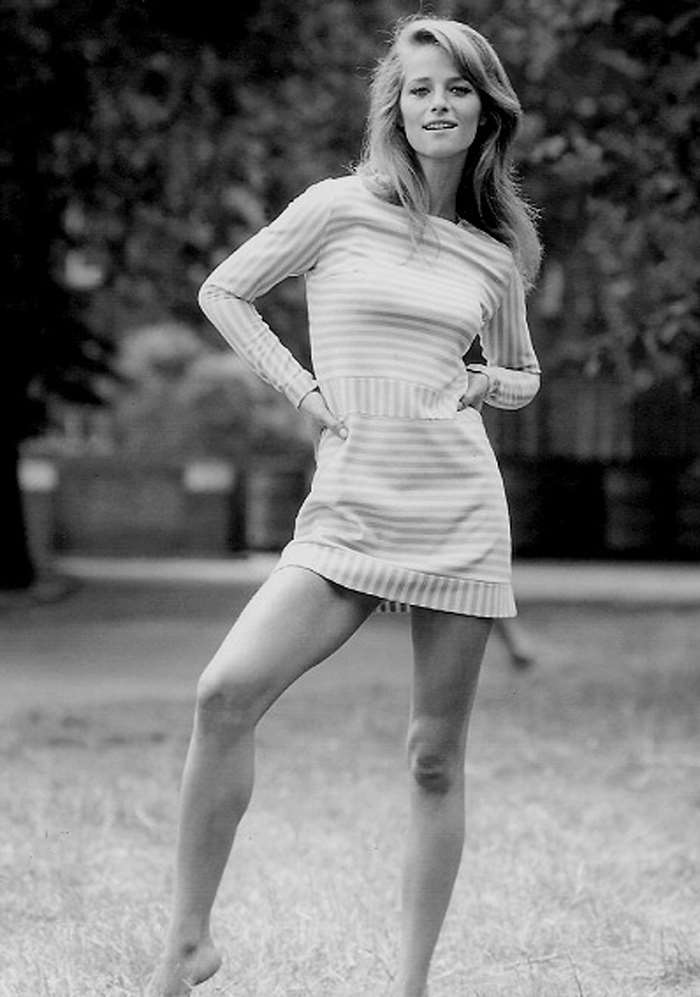
Rampling and Jarre also brought up Émilie, from the composer’s first marriage; her memoir is dedicated to all three. The glamorous couple met at a dinner party in St Tropez in 1976; it was before Jarre found great fame with the album Oxygène, released later that year, which went to No 2 in the UK (and 146 in France). After shattering the bones in one of her legs, she is taken, unwillingly, by her son to the house he shares with her rebellious teenage grandson. ” she asks the Anglican priest who visits her, hoping that she might feel a twitch upon the thread.

(2020 TV Movie)
This thrilling display of range deepened further when she played a wife tormented by the ghost of another woman in her marriage in 45 Years. Rampling has never deliberately courted controversy, but it has found her nevertheless. Her first marriage to New Zealand actor Bryan Southcombe was in 1972. She shared an apartment with Southcombe and Randall Lawrence, a male model. The inevitable “ménage à trois” label was used liberally by the press. They divorced in 1976 and two years later Rampling married the hugely successful French composer Jean-Michel Jarre.
Life
The film was condemned and celebrated with equal fervor during its release, but all parties agreed that Rampling's performance, which featured her in feverish scenes of morbid fetishism, was the film's highlight. The picture did much to cement Rampling as the thinking man's sex symbol, as did a 1973 layout for Playboy shot by Helmut Newton and a widespread rumor that she lived in a ménage-a-trois with her then-husband, publicist Bryan Southcombe, and male model Randall Laurence. Some reviewers attribute this ability to her mysterious, preternatural charisma and abiding beauty, and that is part of it. But it is also her actively focused talent for the natural representation of real people.
These Photos From Over 100 Years Ago Show Us Paris in Colour
Rampling has consistently declined to discuss the decades of unsavoury behaviour in the film business brought to light by the #MeToo movement. “Not that I’m saying I’m in any way favouring it – obviously, [it’s] despicable. But, if you want the role, well, you’re going to do things to get it, aren’t you?
News & Interviews for Charlotte Rampling
Does she think she came to fame at a time when it was harder to find good roles for women? We’re in a stately hotel in Edinburgh talking about her film, Juniper. Film legend Charlotte Rampling explains the real reason people fear her, why she’s against plastic surgery and the ménage à trois that scandalised 1970s Britain.
Business Directory Quick Search
Happiness was found in a cabaret act she enjoyed with her older sister, Sarah, who died by her own hand in Argentina in 1967 after the premature birth of her daughter. She briefly studied Spanish at a college in Madrid before dropping out in 1963 to travel with a cabaret troupe. Upon her return to England in 1964, she modeled to support herself while learning the craft of acting at the Royal Court Stage School.
In 1997, she was a jury member at the 54th Venice International Film Festival. It was David, though, who rang her from Argentina to tell her he was at his aunt’s grave in Buenos Aires, with his cousin, the only son of her elder sister Sarah. I want to be with you.” Rampling tells of the girl with whom she made her stage debut at 14, in Stanmore parish hall, singing French songs in fishnets and raincoats, before they sneaked off after school together to do the same at an audition for a club in Piccadilly. At 21, Sarah left to visit New York, then went on to Acapulco, where she met a rich cattle rancher, and within a week had married him. She won many awards for her performance in "45 Years" - and now she might also get an Oscar.
Cast (TV Mini-Series)
She was sharing a house with Bryan Southcombe (her future husband and the father of her eldest son Barnaby) and the male model Randall Laurence, “I was very frank. But we weren’t thinking, oh, if I say this, shouldn’t perhaps say that, because I mean, now we have to think what the young people think. Because it’s not correct, it’s not this, it’s not that, but then it was like, when David Wigg of the Daily Express asked me, which one do you love?
When a self-destructive teenager is suspended from school and asked to look after his feisty alcoholic grandmother as a punishment, the crazy time they spend together turns his life around. A 17th-century nun in Italy suffers from disturbing religious and erotic visions. She is assisted by a companion, and the relationship between the two women develops into a romantic love affair.
They have a drunken celebration, and the evening ends with the officers engaging in gay sex with one another. At dawn, the hotel is stormed by SS troops, who slaughter the SA members. Konstantin is personally executed by Friedrich, whom Aschenbach brought along to make him do his own dirty work. Principal photography of The Damned took place in locations throughout Italy, West Germany, and Austria. The film opened to widespread critical acclaim, but also faced controversy from ratings boards for its sexual content, including depictions of homosexuality, pedophilia, rape, and incest.
The 70 Hottest Women of The '70s - Complex
The 70 Hottest Women of The '70s.
Posted: Thu, 13 Sep 2012 07:00:00 GMT [source]
Emma Darwin receives an unexpected visitor when she discovers her late husband's autobiography. The film was released on DVD by Warner Home Video in 2004.[13] A 2K restoration of the film by the Cineteca di Bologna and Institut Lumière was released on Blu-ray and DVD by The Criterion Collection on 28 September 2021.[14] All of the previously-censored footage was restored to the film for both of these home video releases. After the first screening of the film, 12 minutes were cut, including the scene where Lisa hangs herself after being molested.[4] For the initial American release, much of the Bad Wiessee/Night of the Long Knives sequence was cut. Friedrich is now in control of the steelworks, and Sophie even gets Aschenbach to arrange a decree that gives him her father-in-law's last name and royal title of Baron so they will be able to marry as equals. He is affected by all of his newfound power, and Aschenbach begins to feel that he is not displaying the appropriate subservience to National Socialism, so Aschenbach offers to help Martin destroy Sophie and Friedrich. Martin accepts, as he is bitter that his mother has used him to benefit Friedrich and herself.
After star turns in "The Verdict" (1982) and "Angel Heart" (1987), her star waned in the late 1980s due to personal turmoil, though she rebounded in the late 1990s as Aunt Maude in "Wings of a Dove" (1997). Rampling went on to impress audiences with performances as Miss Havisham in "Great Expectations" (BBC, 1999), as well as critical darlings "Under the Sand" (2000) and "Swimming Pool" (2003). As she entered her sixties, Rampling's career was in full bloom, with steely supporting turns in "The Duchess" (2008) and "Never Let Me Go" (2010). The definition of class for many a moviegoer the world over, Rampling's formidable body of work made her one of the most respected actresses on two continents. Rampling’s father was a British army officer and consequently she spent many of her formative years in Gibraltar, France and Spain.
On Demand: Cult Classics SBS What's On - SBS
On Demand: Cult Classics SBS What's On.
Posted: Fri, 08 Jul 2016 07:00:00 GMT [source]
In her late teens, she began a career as a model, which quickly led to her being noticed and appearing many movies and TV shows. She first appeared an extra in The Beatles movie "A Hard Day's Night" (1964) and her official credited debut was a year later in the British comedy "Rotten to the Core" (1965). A few years into her acting career, she became a favorite of the '70s European indie film scene, with notable controversial roles in "The Damned" (1969), "The Night Porter" (1974), and "Max, Mon Amour" (1986).
To discover what normal means, you have to surf a tide of weirdness. Her most infamous role, in Liliana Cavani’s The Night Porter, about the sadomasochistic relationship between an SS officer, played by Dirk Bogarde, and a concentration camp survivor, was criticised by many contemporary critics, and banned in some countries. Aschenbach convinces Friedrich and Martin to bar their company from selling weapons to the SA, in hopes of marginalizing the rival group and currying the favor of the army, whose might Hitler will need in order to conquer territories beyond the current German borders. Konstantin discovers Martin has been sexually abusing his nieces and Lisa Keller, a young Jewish neighbor of Martin's girlfriend who commits suicide, and he uses this information to resume providing the SA with weapons and get Martin to call a meeting to place him in charge of the company.


No comments:
Post a Comment